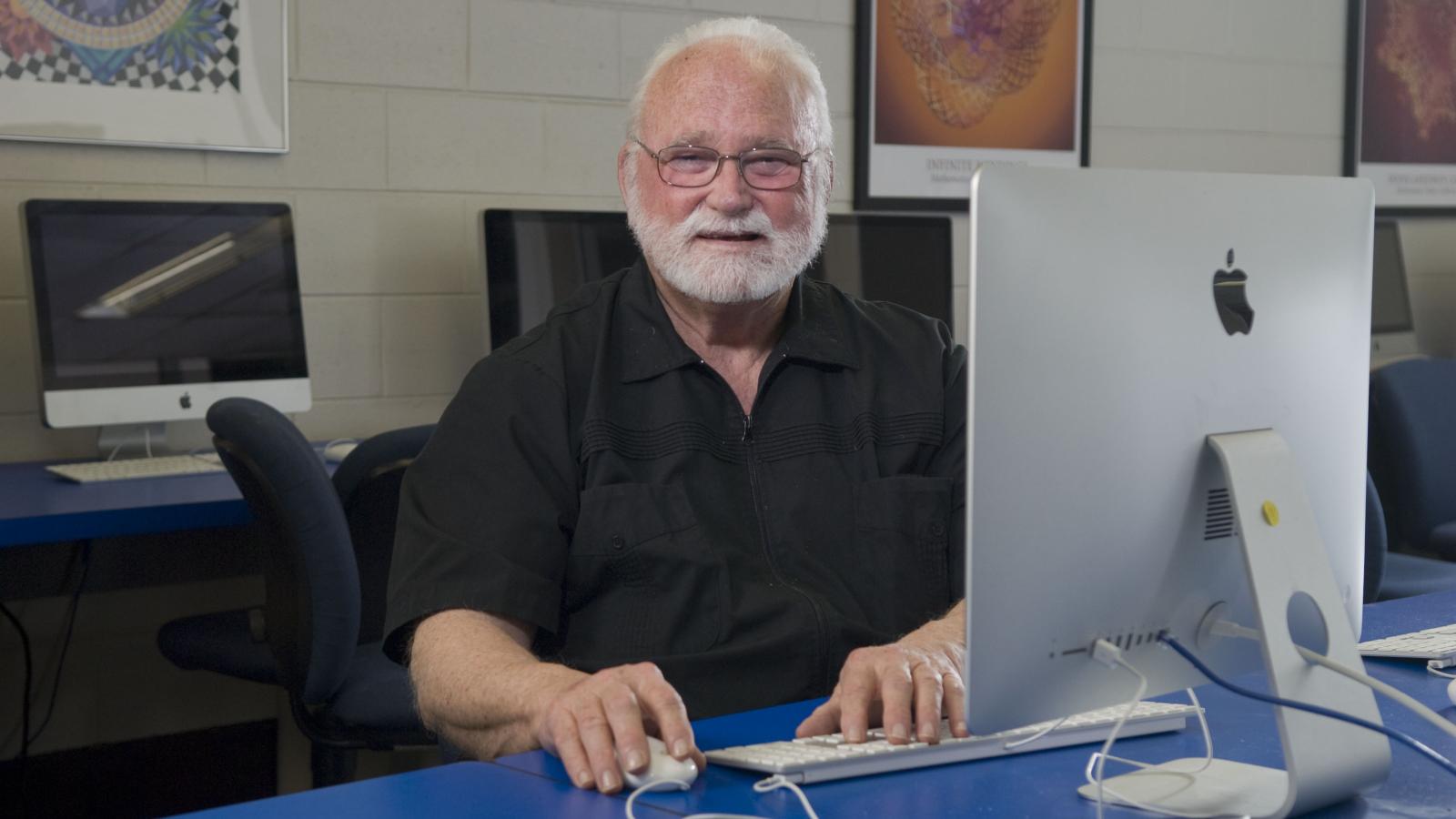
The VCU School of Public Health honors biostatistics alum Karl Peace, Ph.D., as its inaugural Distinguished Fellow for Public Health.
Contributions to Public Health: Karl Peace, Ph.D.
By Paul Brockwell Jr. | Photo courtesy Randolph-Macon College
A run through the MCV Campus helped put Karl Peace, Ph.D., on track toward a storied biostatistics career, shaping access to lifesaving drugs and expanding educational access through philanthropic investments in public health in Georgia and Virginia.
In the early summer of 1973, Dr. Peace was on a jog that would alter his career path. He had just moved to Richmond in 1969 after accepting a job as a mathematics professor at Randolph-Macon College in Ashland. He started his long runs from his home in Richmond’s Fan District and one afternoon found himself in the heart of the MCV Campus at 11th and Marshall streets.
He had heard a little about VCU’s doctoral program in biostatistics, and on a whim decided to follow his feet down into the basement of Sanger Hall, where a chance encounter with W. Hans Carter Jr., Ph.D., landed him a spot in the program. Dr. Carter had joined the biostatistics faculty and would become Dr. Peace’s friend and later the long-time chair of the Department of Biostatistics.
“I told him I was interested in pursuing a Ph.D. in biostatistics,” Dr. Peace recalls. “We agreed that I would start in the fall. I was essentially a walk-on.”
A basement meetup may seem like an unlikely starting point for a career that would improve treatments for high cholesterol and stomach ulcers and help secure FDA approval of the first drug to treat Alzheimer’s disease. Yet, that is where Dr. Peace’s distinguished path began. His work as a biostatistician evaluating the safety and efficacy of breakthrough medications proved essential in bringing new therapies to patients.
AN EXTRAORDINARY DRIVE
Raised in a two-room shack beside Alligator Creek in Baker County, Ga., Dr. Peace was one of four children in a family of itinerant sharecroppers. His parents had less than five years of schooling between them. None of the nine tenant homes he lived in before graduating from high school had running water or electricity.
“Without electricity, how do you study at night?” he said. “With a kerosene lamp, which is not good for the eyes.”
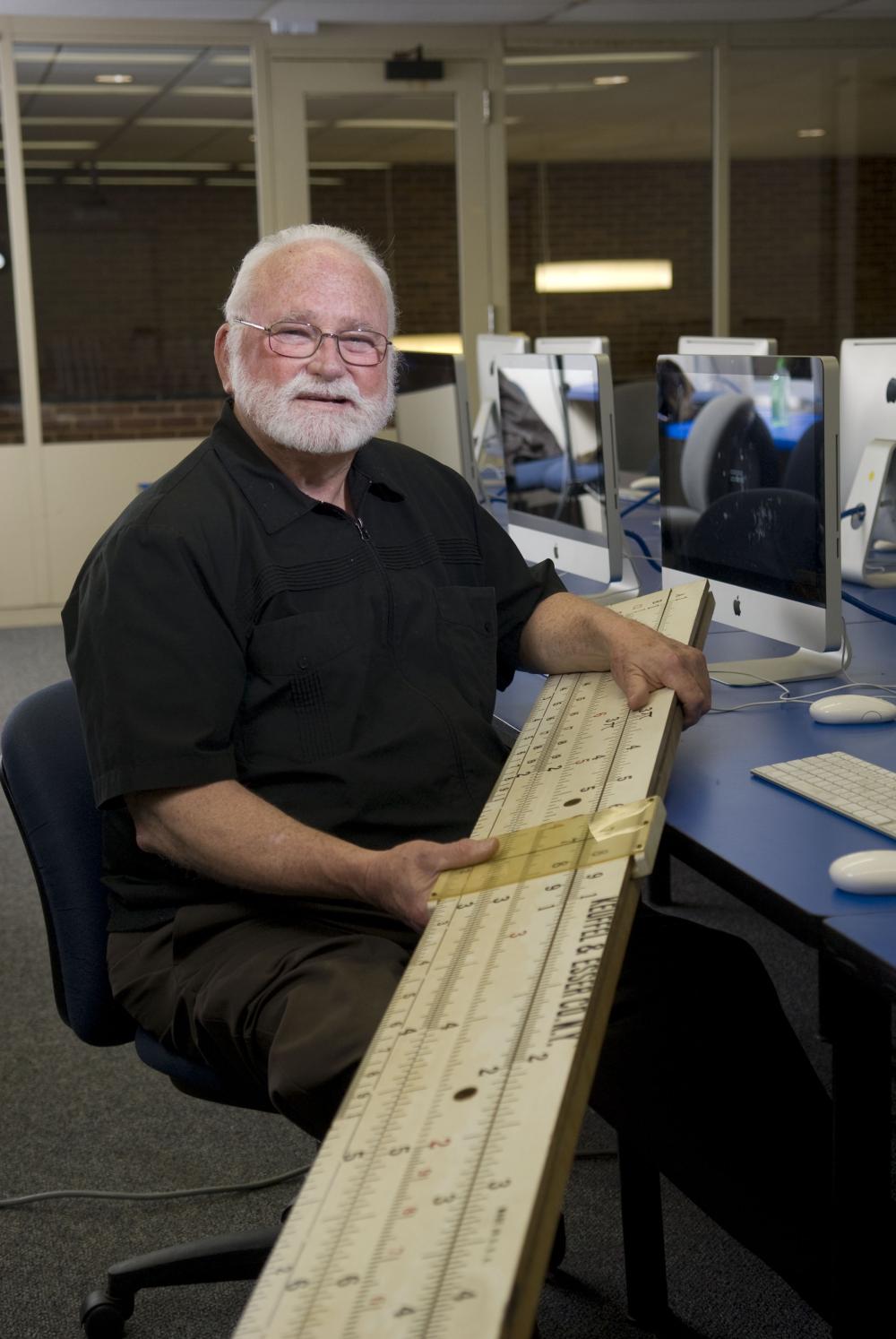 Early on, Dr. Peace developed resilience, a matter-of-fact calm and make-do attitude. His teenage persistence caught the eye of Joe Vines, his high school principal, who saw Dr. Peace’s potential. They drove to Georgia Teachers College (now Georgia Southern University) in Statesboro, Ga., to inquire about scholarships. When the college had none to offer, a local businessman from a neighboring county wrote Dr. Peace a check for $532 to finance his first two quarters of tuition, room, and board.
After those two quarters, Dr. Peace’s grades were strong enough that he easily qualified for a state teacher’s scholarship program. He worked seven part-time jobs simultaneously while an undergraduate, sending money back home to support his mother, younger brother and sister.
After graduating with a degree in chemistry, Dr. Peace went on to earn a master’s degree in mathematics at Clemson in 1964, and taught mathematics at Georgia Southern College for three years. He then returned to Clemson to pursue the Ph.D. in statistics, taking a leave of absence after three semesters to care for his mother who was a cancer patient. During that time, he took on whatever jobs he could to make ends meet from running a bar and selling life insurance to hustling pool before accepting a faculty position in mathematics at Randolph-Macon College in Ashland. That role brought him to Richmond and, eventually, to that fateful summer run.
After he began his studies on the MCV Campus, Dr. Peace pushed himself even harder. For three years, from 1973 to 1976, he juggled what he described as three full-time jobs. He taught four classes at Randolph-Macon, two more in VCU’s night college, and two graduate courses on the MCV Campus, all the while enrolled in three courses for the doctoral program in biostatistics.
Those years passed in a blur. He set his office hours for 6 a.m. – few students showed up at that early hour, but it gave him time to work.
There’s a moral obligation. If you can help someone who needs help, and you don’t – that’s on you. My giving is to individuals with great need in order to allow them to rise higher than they would otherwise.
Karl Peace, Ph.D.
He wrote his own dissertation code in Fortran, a programming language he taught himself, and punched it onto cards that eventually filled two and a half long boxes. The campus mainframe computer ran the program overnight. It was all exhausting. One morning, after parking his 1967 Chevelle Malibu curbside just outside Sanger Hall and dozing off in his office while waiting for results, he woke to a police officer asking about his still-idling car.
Dr. Peace earned his doctorate in 1976 with a dissertation focused on the Cox Proportional Hazards model which addressed an open problem posed by the legendary statistician Sir David Cox. His thesis work was later published in the Journal of the American Statistical Association.
After a brief return to teaching at Randolph-Macon, Dr. Peace entered the pharmaceutical industry, advancing through a series of increasingly senior positions at Burroughs Wellcome, A.H. Robbins, Smith Kline & French, GD Searle, and Parke-Davis/Warner-Lambert. At each stop, his biostatistical work shaped drugs that would become household names.
At GD Searle, as senior director of gastrointestinal studies, he led the clinical operations program that achieved FDA approval of misoprostol, the first drug approved to protect patients from gastric ulcers linked to prolonged use of common pain medicines. The drug helped address a condition responsible for silent, often fatal bleeding in older patients and young athletes alike. He is among the few biostatisticians to have carried full clinical responsibilities for a drug development program, a role normally reserved for physicians.
During his time at Parke-Davis/Warner-Lambert, he played a pivotal role in the landmark Helsinki Heart Study, a five-year, double-blind trial of over 4,000 Finnish lipidemic men at risk of coronary heart disease that led to FDA approval of gemfibrozil as the first drug for the reduction of CHD risk. The open-label follow-up phase, in which patients could switch treatment every three months, presented an analytical puzzle that Dr. Peace addressed with methods he published in two papers. He remains modest about the impact of the methods.
“I developed an analysis, but I’m not sure it’s the best analysis,” Dr. Peace said. “Thus far, however, no one has written with a better one or written a paper criticizing that solution.”
Perhaps the most meaningful chapter of his career began with his work on tacrine, a drug first developed in the 1940s as a battlefield antiseptic that showed later promise for Alzheimer’s disease. After an initial FDA advisory committee declined to approve it based on a single trial, Dr. Peace collaborated with pharmacologist Nick Holford to develop a model explaining how the drug worked. The pair published their findings in the Proceedings of the National Academy of Sciences. After roughly 10 additional trials, the FDA approved tacrine in 1993 as the first drug for Alzheimer’s disease.
Dr. Peace has continued to give back generously to educational institutions that shaped him and enabled his success. He created the endowed Biopharmaceutical Applied Statistics Scholarship Fund at the MCV Foundation. That fund now exceeds $1.4 million and, together with the Karl E. Peace Endowed Award for Excellence, has supported 67 students in biostatistics since 1996.
That drug reached a patient Dr. Peace knew personally. The wife of Georgia Southern College’s basketball coach, J.B. Scearce, called him asking about the possibility of accessing the drug for her husband who had Alzheimer’s. Dr. Peace had gotten to know the coach years earlier through his work as a tutor for the men’s basketball team, one of the many jobs he worked as an undergraduate student. Dr. Peace directed her to a clinical trial site in Savannah, Ga. Months later, she reported that Coach Scearce had gone from being unable to write a check or shave to balancing his checkbook and driving again.
Even as his pharmaceutical career advanced and he made major contributions to drug developments, he stayed connected to academia, holding adjunct appointments at what is now the VCU School of Public Health, University of Michigan, Temple University, University of North Carolina and Duke University.
GIVING BACK
In 1989, Dr. Peace left industry to found his own consulting firm, which grew to 50 employees and served more than 50 pharmaceutical clients.
In 1998, he gave ownership of the business to his wife and collaborator, Jiann-Ping Hsu, Ph.D., and returned to teach at Georgia Southern. There, he discovered that the university had no biostatistics degree program and that the broader university system in Georgia had no school of public health at all.
He set out to change that landscape by developing and growing a master’s program in biostatistics and founding a Center for Biostatistics. He later endowed and established the Jiann-Ping Hsu College of Public Health, named for his wife and collaborator, who was diagnosed with cancer in 2001 and died in 2004 at age 56. She knew of the honor before she passed.
Dr. Peace has continued to give back generously to educational institutions that shaped him and enabled his success. He created the endowed Biopharmaceutical Applied Statistics Scholarship Fund at the MCV Foundation. That fund now exceeds $1.4 million and, together with the Karl E. Peace Endowed Award for Excellence, has supported 67 students in biostatistics since 1996. Thirty-two of those students have earned their doctorates. He also helped to create the W. Hans Carter Jr. Professorship in Biostatistics, which honors the faculty member he first met on the fateful run back in 1973. Dr. Peace also intends to endow a second professorship, this one in his own name.
He also created the first eminent scholar chair in biostatistics at the University of California, Berkeley, two eminent scholar chairs at Georgia Southern, a professorship at Randolph-Macon College, an endowment at Hampden-Sydney College, and 12 additional endowed scholarships across institutions. This year, all 15 students in biostatistics at the Jiann-Ping Hsu College of Public Health are supported by endowments he created.
For him, the reason behind such generosity is simple.
“There’s a moral obligation,” he said simply. “If you can help someone who needs help, and you don’t – that’s on you. My giving is to individuals with great need in order to allow them to rise higher than they would otherwise.”
At 85, Dr. Peace still teaches and closely follows the field. He is particularly interested in how artificial intelligence is poised to reshape the discipline he devoted his life to.
“That’s going to have a profound impact,” Dr. Peace said. “It’s going to require biostatisticians to learn about AI and all of its applications.”
He sometimes wishes he had a few more years of classroom energy to master AI himself. But the numbers that matter most to him now are different: the dozens of students he’s supported over a lifetime of giving back and the millions of patients who have benefited from drugs made possible by his meticulous work.
If you would like to support the VCU School of Public Health, please contact Laura Keller, director of development in the Office of Medical Philanthropy and Alumni Relations, at 804-628-8907 or KellerL3@vcu.edu.