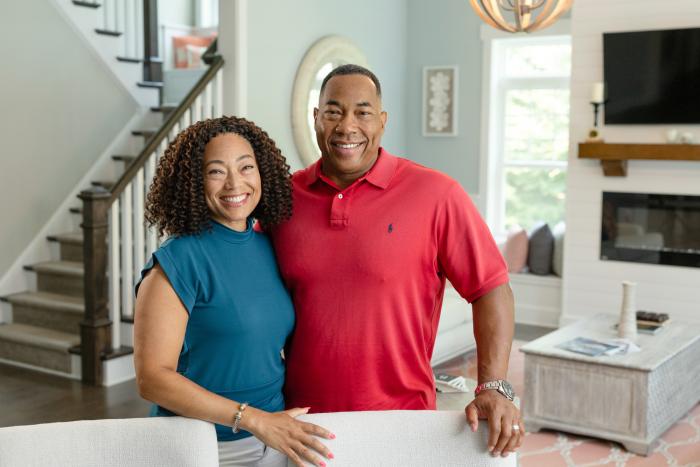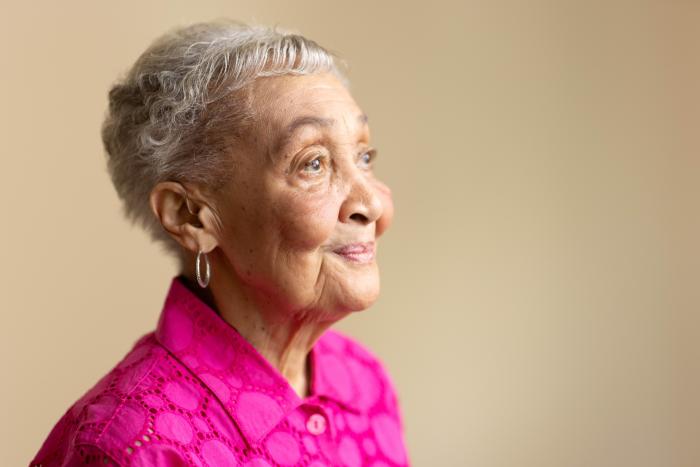
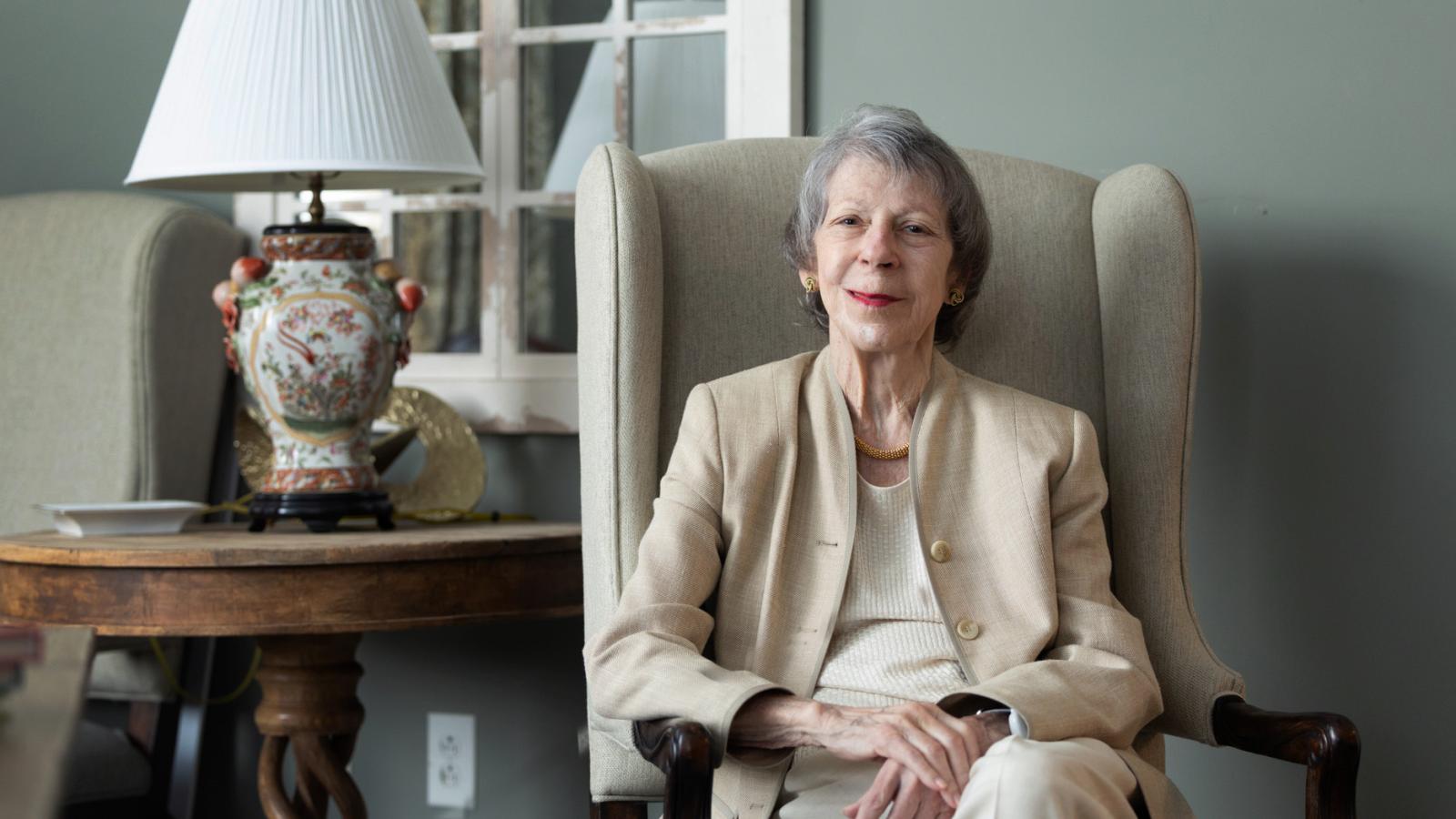
For more than three decades, Adrienne Maxwell has built a movement around Massey by doing what she does best: bringing people in. Photo: Daniel Sangjib Min
Adrienne Maxwell Makes Connection Her Cause
By Caitlin Hanbury
Adrienne Maxwell came to Richmond from New York with boardroom instincts honed in an era when women weren’t expected to have them.
Starting her finance career in the 1960s – when women executives were still an anomaly and ambition in a woman was met with surprise – she learned to read rooms, build trust and turn complex conversations into action.
It’s one thing to have an idea and another thing to execute it. And it was a team effort.
Adrienne Maxwell
Those instincts found new purpose in Richmond. They carried into her advocacy for VCU Massey Comprehensive Cancer Center, where she applied the same clarity and drive to building community around cancer care, education, access and research – and to strengthening the fundraising and awareness efforts that supported it.
After she and her husband, Jack, arrived in Richmond, Maxwell wasn’t searching for a committee to join. She was looking for a mission. That mindset quickly drew her into a circle of volunteer peers – people like Rhoda Thalhimer and Morgan Massey – philanthropic drivers in Richmond who often steered one another toward causes that needed steady hands and clear vision.
Maxwell met with David Goldman, M.D., then director of the Massey Cancer Center. As she walked into the meeting, longtime Massey benefactor Jeanette Lipman was walking out. Dr. Goldman mentioned that Lipman had just provided funding for the Rural Cancer Outreach Program to help Massey oncologists like Chris Desch, M.D., and Tom Smith, M.D., travel to remote parts of Virginia. The program – the first of its kind in the nation – earned a reputation for delivering expert, continuous care to rural cancer patients.
That detail struck Maxwell.
Massey wasn’t just treating cancer; it was taking responsibility for ensuring care reached everyone who needed it. That was the moment, in 1989, when Maxwell decided she would volunteer with Massey.
For Maxwell, it stirred a fond memory of a college roommate who had worked with the Kentucky Frontier Nursing Service, riding into remote hollows on horseback to deliver care where it had rarely reached before. Maxwell understood that access to care wasn’t simply a matter of logistics, it was about making sure no one was out of reach. And it became clear to her that the most meaningful way for her to help take on that challenge was through Massey, where there was a commitment to reaching all communities and to conducting research that could change outcomes.
Shortly after meeting with Dr. Goldman, Morgan Massey – a volunteer leader and fundraising force behind the cancer center’s growth – invited Maxwell to join the Massey Advisory Board and chair the development committee. He was working to formalize the board’s structure and strengthen its philanthropic focus, and he made it clear to those around him that Maxwell was the person who could bring people together. He trusted her instincts and her ability to turn ideas into action, and he signaled that she was the one who could rally people for their cause.
Maxwell recently laughed about those early days. “It felt strange to write my own rules,” she said. And in many ways, she did – finding whatever space the group could meet in, pulling together a volunteer corps, poring through her own and others’ address books, and penning notes to ask friends and friends of friends for support.
Those early efforts became the groundwork for what would grow into Massey Club, a circle of supporters giving $1,000 or more annually to Massey’s unrestricted fund. Now in its 35th year, Massey Club raises more than $5 million annually to support the cancer center’s most urgent needs.
Once, she recalled, a friend misread one of her handwritten solicitations – a hazard of her penmanship during long note-writing sessions – and assumed she was asking for a smaller gift than intended. When the donor found out, he teased that he would have given more if only he could have read her writing. Maxwell loves that story because it captures something she already knew at the time: people often want to do more – they just need to be asked.
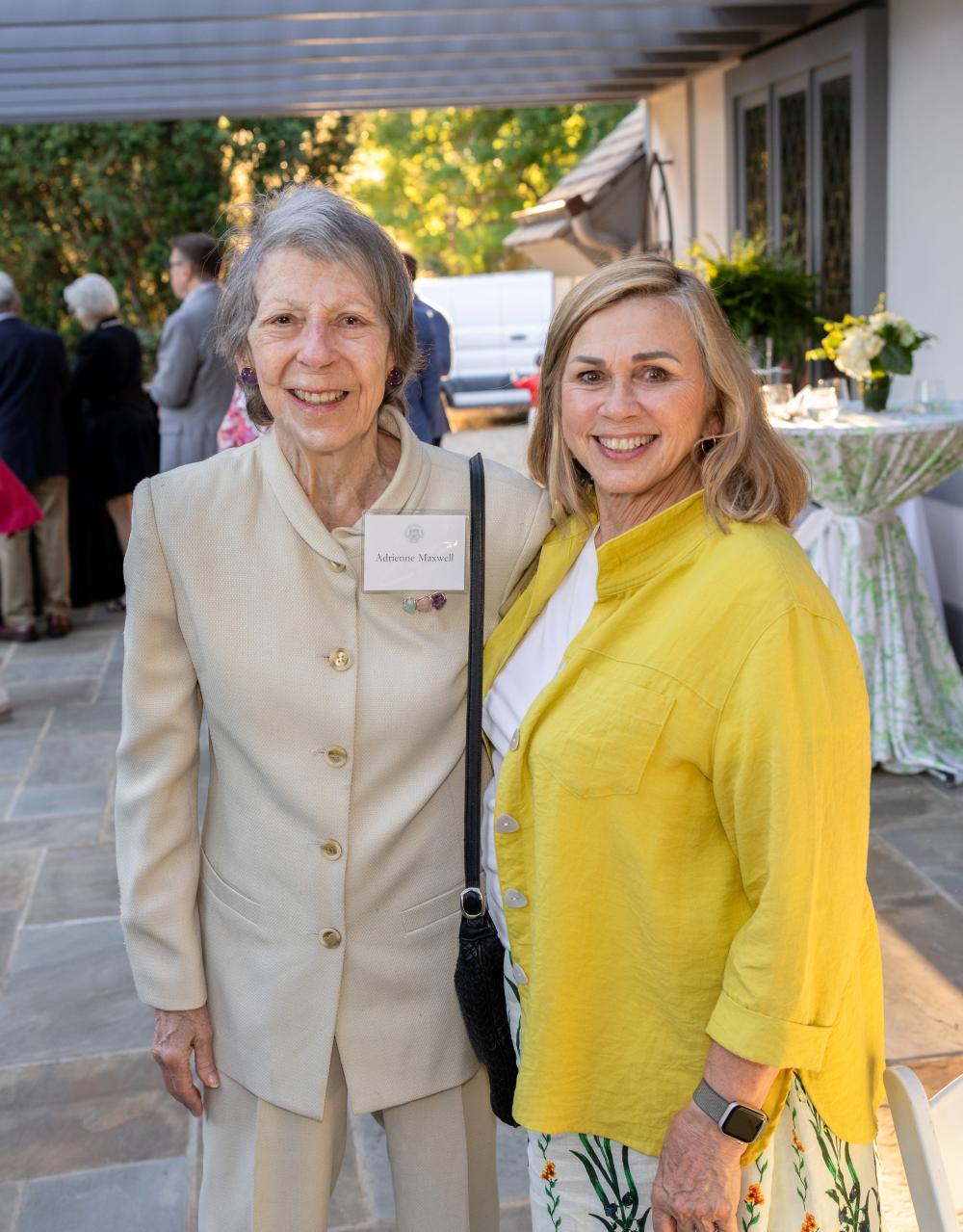
“I changed some of my initial thoughts about Massey Club to be bigger,” said Maxwell, who received the MCV Foundation's 2020 Michael B. Dowdy Award in honor of her volunteer leadership helping to raise funds to support the MCV Campus.
Bigger meant expanding the vision and the approach: she asked for more, drew in people who had never been involved, and built something new that gave Massey a stronger foundation. And growth wasn’t just about money – it was about expanding the community around Massey.
“It’s one thing to have an idea and another thing to execute it. And it was a team effort,” Maxwell said.
That same instinct to widen the circle helped spark the Women and Wellness Luncheon, a companion effort to Massey Club that extends the center’s mission by engaging even more women in Massey’s work.
“Massey Club and Women and Wellness isn’t about how much we bring in,” she insisted. “It really exists to connect more people to Massey’s care.”
For Becky Massey, longtime friend and fellow Massey supporter, Maxwell’s influence has shaped the cancer center in ways that are unmistakable and lasting. “Adrienne Maxwell is an extraordinarily intellectual and giving individual and has had a profound impact on Massey Comprehensive Cancer Center the past three decades,” she said. “A greater level of awareness and support of our region’s comprehensive cancer care and research has resulted from Adrienne’s passion and commitment.”
What makes Maxwell’s story remarkable is not just that she helped build something lasting – it’s how she built it, and how she built it with others. She brought the full force of her professional life into her volunteer one. The strategic mind that once guided major business decisions now guided community building. She didn’t soften her skills to fit volunteer work; she sharpened volunteer work with her skills.
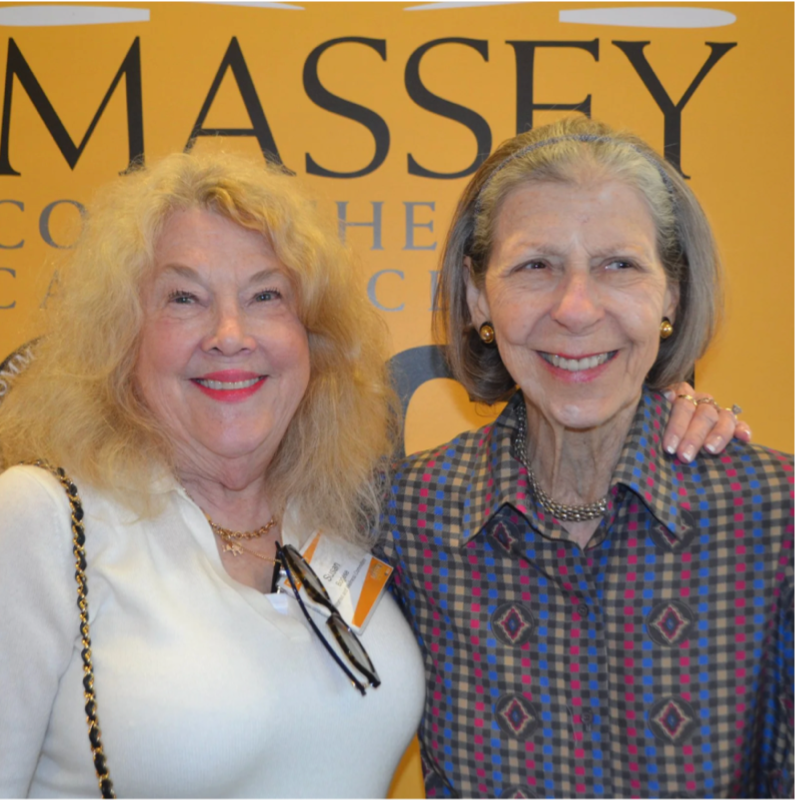
Alongside her were early founders, champions, volunteers and leaders who followed, all of whom helped build the philanthropic culture that continues to sustain Massey today and drive its success.
Thirty‑five years later, Massey Club reflects not only how they started, but how they kept at it. And Maxwell still does. When weather pushed this year’s Women and Wellness Luncheon to a new date, she was right back at it – dutifully posted next to her phone, calling friends, because persistence is simply how she leads.
Her commitment has always been rooted in the same belief – the one that first inspired her to get involved. “I’m patriotic and believe in being a good, productive citizen,” she said. “To be a good citizen, you need to have good health and education.”
It’s a conviction at the heart of her service, and one that has guided every chapter of her work with Massey.
If you would like to support the VCU Massey Comprehensive Cancer Center, contact Jasmine J. Davis, executive director of development with the Office of Medical Philanthropy and Alumni Relations, at 804-830-4578 or jjdavis3@vcu.edu.