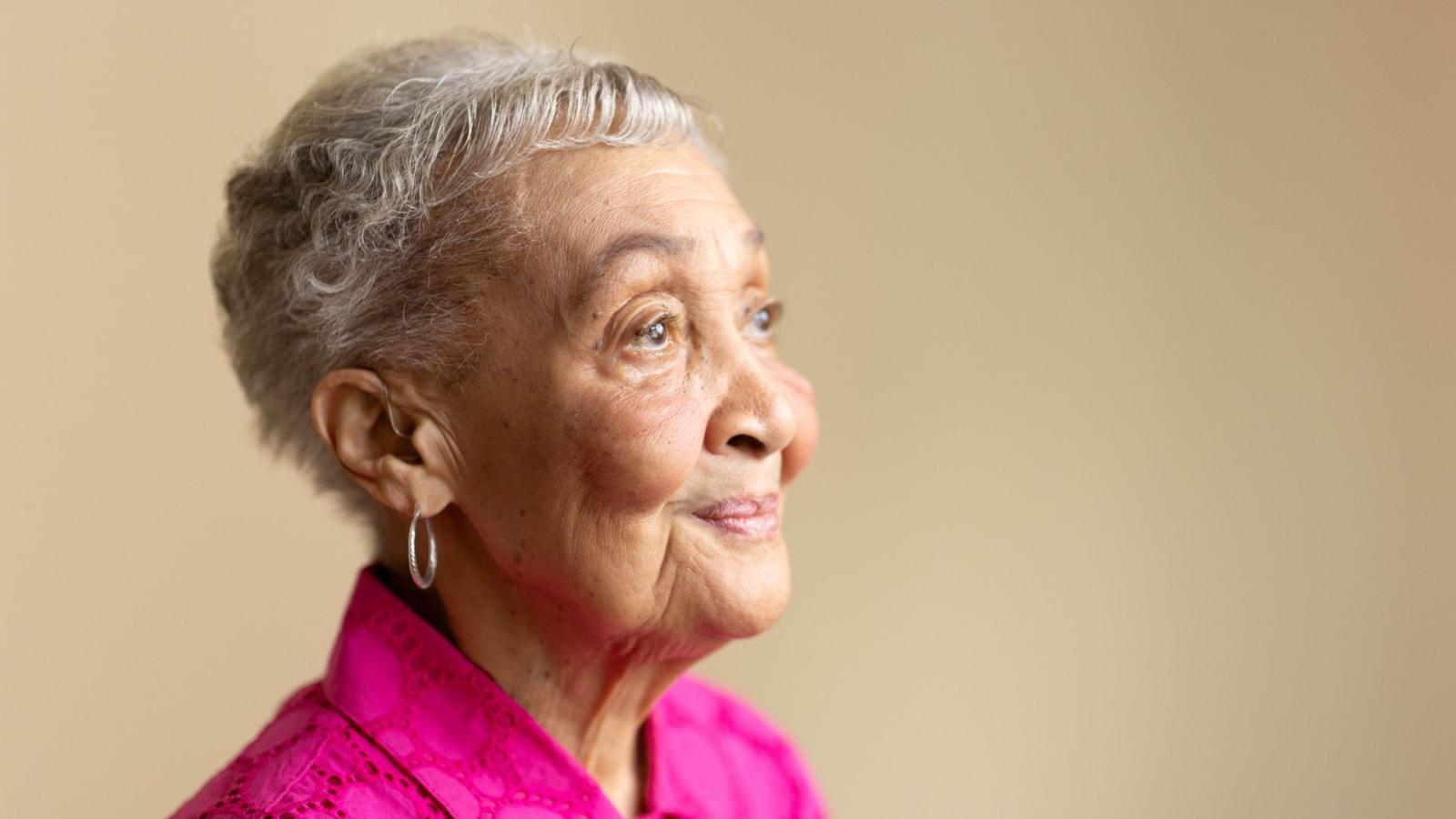
A community-driven effort has worked for more than a decade to raise funds to elevate an endowed professorship honoring Florence Neal Cooper Smith into an endowed chair, recognizing her lifelong advocacy for sickle cell disease research. Photo: Tyler Trumbo
‘Mother of Sickle Cell Disease’ in Va. Continues to Inspire Advocacy
By Paul Brockwell Jr.
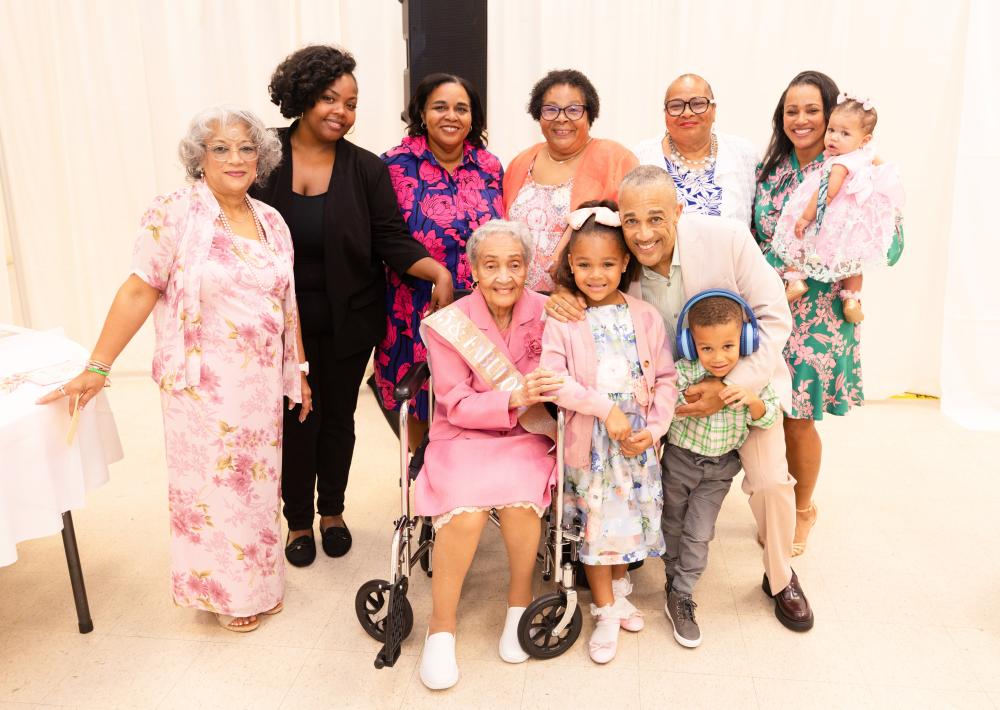
At 95, Florence Neal Cooper Smith is royalty among the 130 people who attended her birthday party in August.
In addition to her birthday, the group was celebrating the culmination of years of work to elevate an endowed professorship named in her honor to an endowed chair.
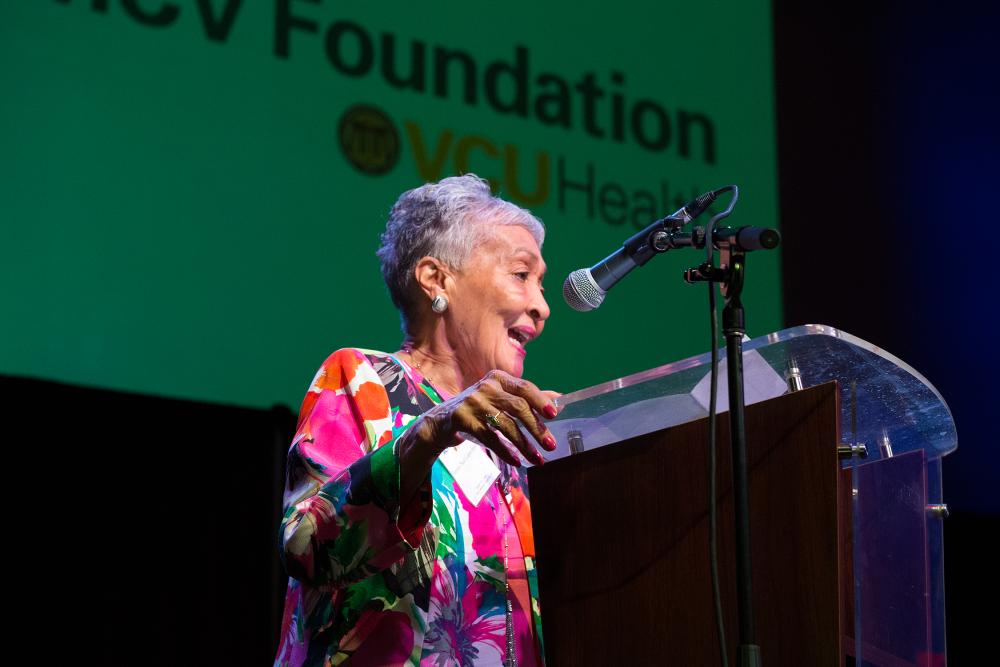
For more than a decade, dedicated volunteers and community groups have built – brick by brick – a grassroots effort to fund the professorship’s elevation to an endowed chair, the highest academic honor a university can award its outstanding faculty.
Many of the attendees at her celebration know her as the “Mother of Sickle Cell Disease” in Virginia, and she’s inspired most of them to join her efforts over the years. She has worked since the 1960s with the community to raise awareness about sickle cell disease, to support research for better cures and to ensure access to treatment.
Sickle cell disease affects around 100,000 people in the U.S., and more than 90% of them are Black. Without proper access to care, most sickle cell patients experience severe complications and/or early death. Florence works to change that reality.
In 1969, she organized Richmond’s first citywide survey to determine awareness about sickle cell disease. After passage of the 1972 National Sickle Cell Anemia Control Act, she co-founded the Virginia Sickle Cell Anemia Awareness Program and later helped pave the way for mandatory statewide testing for sickle cell trait in newborns throughout Virginia in 1989. After retiring in 1995, she continued to advocate for greater understanding of the disease and funding to support research into treatments, all while recruiting fellow advocates at the local, state and national level.
In 2014, the Florence Neal Cooper Smith Professorship, one of few endowed professorships named for an African-American woman in the U.S., was established to support research aimed at finding a cure. From annual motorcycle rides and 5K walks to the efforts of several social clubs and organizations, the collective action by individual donors and community groups is evidence that Florence’s voice for progress continues to resonate through the people she educated and inspired. Today, those people have invested in Florence’s hope of a future when suffering from sickle cell disease can end thanks to treatments that have been fueled by research.
A particularly impactful group has been Finding a Cure Together 4 Sickle Cell (F.A.C.T.S.). In addition to raising funds for the endowed chair, F.A.C.T.S. and other groups have advocated successfully for historic investments in care and research from the state. The recent Virginia state budget included nearly $20 million in new funding that will bolster adult and pediatric patient care, expand education and awareness programs, fund gene therapy through Medicaid, and establish VCU Health’s leadership in coordinating access to care statewide.
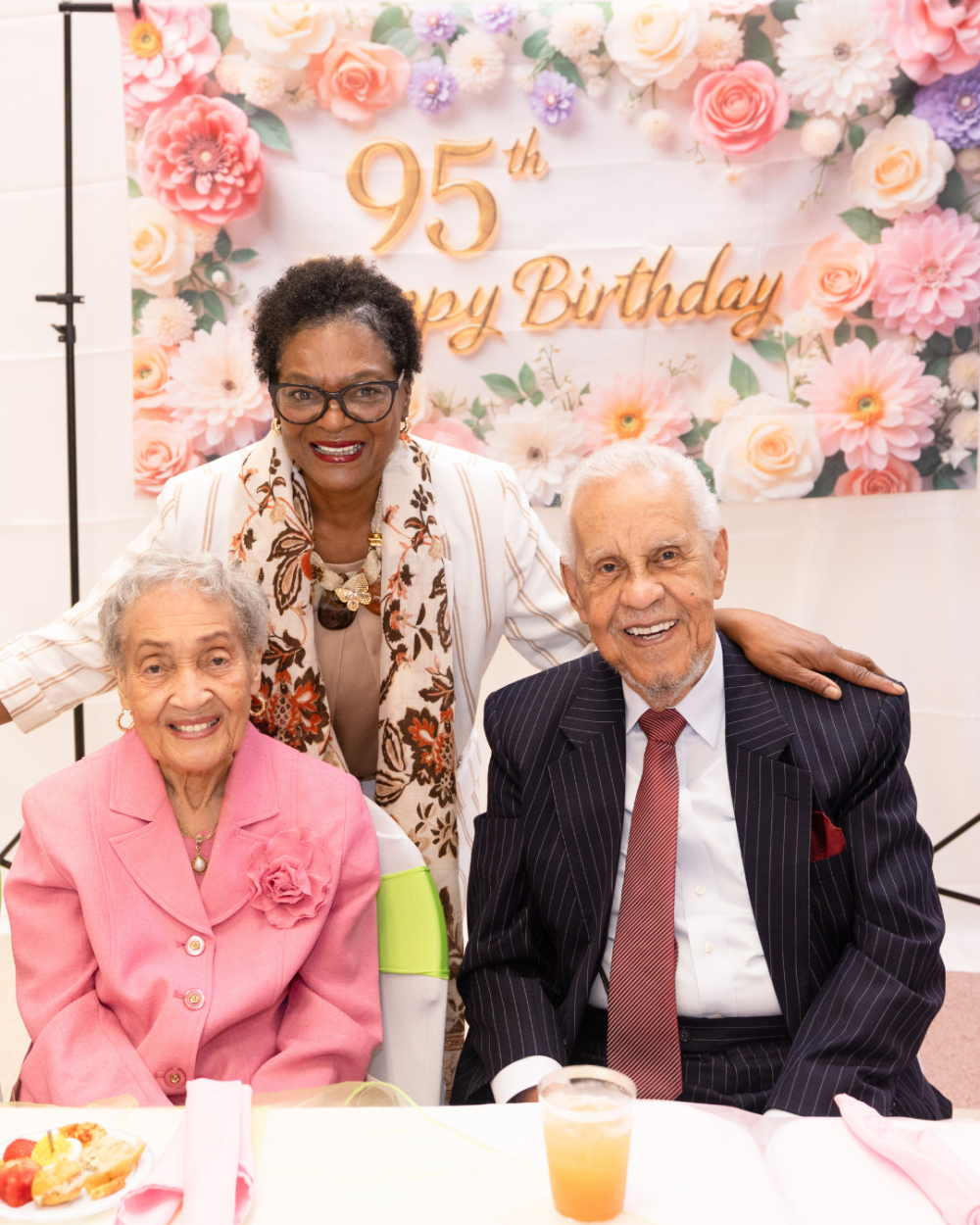
Another important ally has been Del. Delores McQuinn. The Richmond delegate was instrumental in securing support and the final funding to elevate the professorship to an endowed chair.
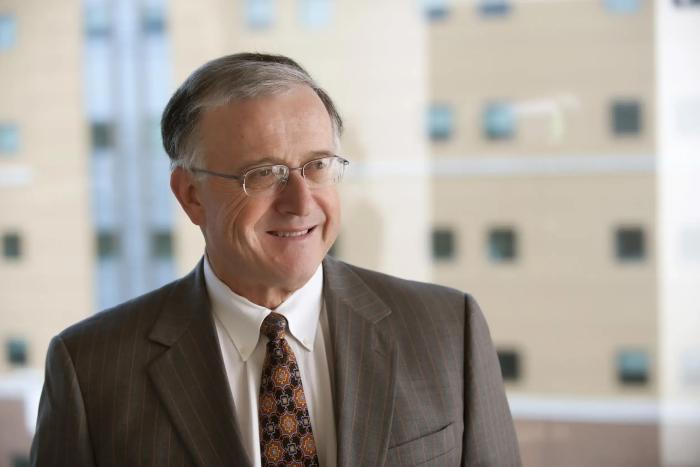
The endowed chair named in Florence’s honor is held by Wally R. Smith, M.D., a nationally recognized sickle cell expert and director of the VCU Health Sickle Cell Program. Dr. Smith has been instrumental in advancing critical research, care and innovation on the MCV Campus. Elevating this professorship to an endowed chair will strengthen the long-term impact of the endowment on sickle cell research and care.
“This milestone honors Florence’s extraordinary legacy while creating new opportunities for discovery, innovation and improved care for patients affected by sickle cell disease,” said Brian Thomas, interim president and CEO of the MCV Foundation. “All of us who serve the MCV Campus are grateful for the tremendous support from the community for this important initiative.”
If you would like to support sickle cell disease research and care on the MCV Campus, please contact Brian Thomas, interim president and CEO of the MCV Foundation, at 804-828-0067 or bthomas@mcvfoundation.org.