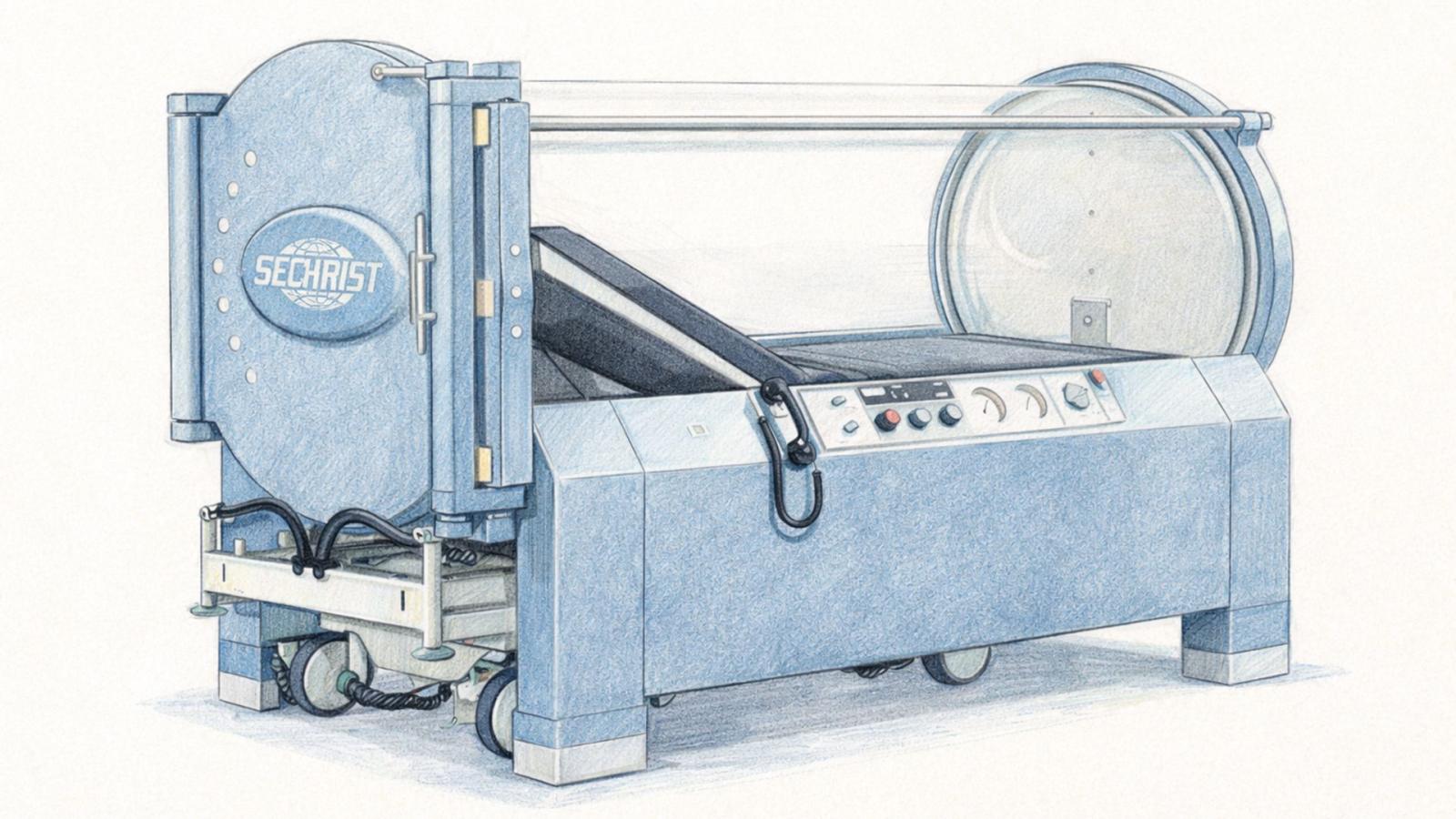
Rendering of a hyperbaric oxygen therapy chamber. The Richard S. Reynolds Foundation has provided a grant to VCU Health that will fund two hyperbaric oxygen therapy chambers at VCU Medical Center’s North Hospital in a newly designed space named the Reynolds Outpatient Wound Care Clinic.
Reynolds Family Provides Support for Hyperbaric Oxygen Therapy Chambers at VCU Health
By Holly Prestidge
People in Central, Southside and Eastern Virginia who are undergoing treatment for traumatic injuries, diabetic ulcers, cancer, amputation and other challenges will soon have access to a potentially life-changing therapy.
The Richard S. Reynolds Foundation has provided a grant to VCU Health that will fund two hyperbaric oxygen therapy chambers at VCU Medical Center’s North Hospital in a newly designed space named the Reynolds Outpatient Wound Care Clinic. Chambers will also be installed at VCU Health Community Memorial Hospital in South Hill.
Hyperbaric chambers are pressurized tubes that provide a higher concentration of oxygen level to patients, promoting a better healing process. Unlike Earth’s normal 21% oxygen levels, the chambers are filled with 100% oxygen, then pressurized to at least twice the normal pressure on our bodies. It’s the equivalent of diving at 51 feet below sea level. That pressure forces oxygen to dissolve into blood, tissues and spinal fluid, which increases its delivery at least 20 times more than normal within the body.
Super oxygenated blood ignites cellular processes that promote blood vessel growth, produce collagen, kill bacteria and reduce swelling, ultimately speeding up the healing process for more than a dozen recognized conditions, including crush injuries, decompression sickness, gas embolisms, acute traumatic arterial ischemia and more.
Patients lie in the chambers for two hours at a time, five days a week, for as many as 60 sessions, which are referred to as dives.
“To be able to treat the complications associated with radiation given for cancer, for example, that’s huge because the results are so profound,” said Stacy Street, M.D., director of wound care services at the VCU School of Medicine Department of Surgery. “Traditional cancer treatments, while lifesaving, can be almost as damaging to patients’ quality of life as fighting the initial disease, but with these chambers, patients who have already been through an awful lot are finally getting their quality of life back in less time and with fewer side effects.”