
An anonymous $1 million gift to the Division of Nephrology at the VCU School of Medicine is poised to transform the future of care for advanced kidney disease.
Transformative Gift Will Support Precision Kidney Care
Tiredness, shortness of breath, stiff joints and inflammation are daily ailments many people associate with aging or being overweight. Few consider that these could be symptomatic of advanced kidney disease — and therein lies the problem.
Nearly 1 million individuals across the U.S. have end-stage kidney disease, and many of them don’t know it.
Kidneys are the body’s filtration system, removing waste and fluids from the blood. When they’re not working properly, toxins remain in the blood and cause problems. Often, by the time kidney disease is diagnosed, it has reached stages 4 and 5, or end-stage, when complicated transplants or a lifetime of dialysis are the only options to keep people alive.
The average wait time for a kidney transplant is five years, and every day as many as 10 people in the U.S. die while waiting for a kidney transplant.
If only those diagnoses could come earlier in the lives of patients.
That possibility looms at VCU Health, thanks to a transformative gift. An anonymous $1 million contribution to the Division of Nephrology at the VCU School of Medicine has established the Gupta Innovation Fund for Transplantation and Nephrology Research. The fund is the driver behind the VCU Kidney Disease and Transplant Epidemiology Collaborative, or KiTE, a dynamic initiative launched in 2023 that leverages the strengths of VCU’s expertise in nephrology plus data analytics, genetics, immunology, artificial intelligence and more.
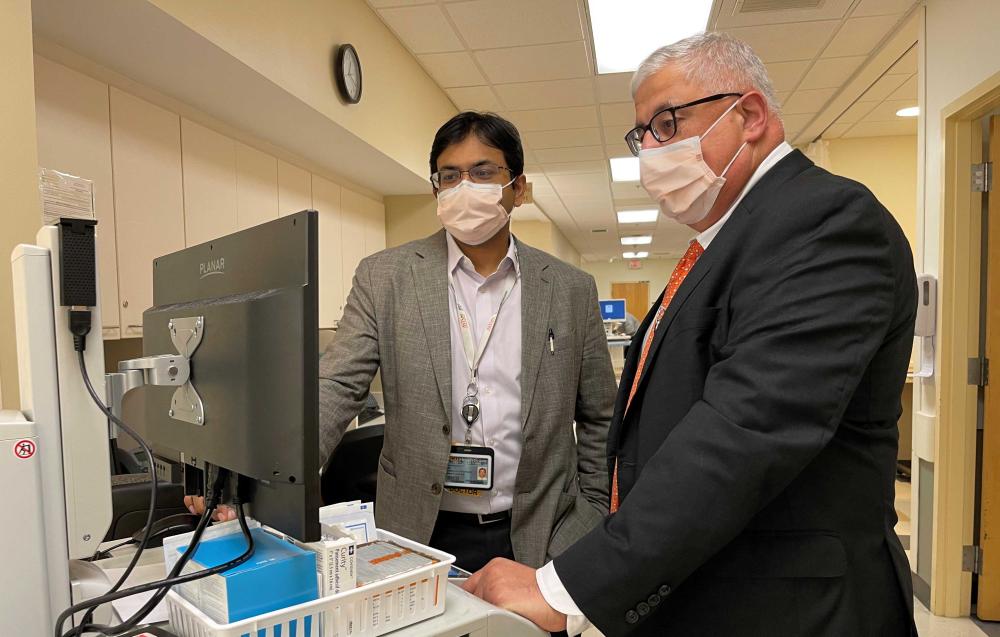
KiTE research teams are developing tools that mine electronic health records to identify patients early who may be at risk of advanced kidney disease. That data can also be used to improve pre-transplant patient health and personalize post-transplant immunosuppression to reduce the risks of transplant infection and rejection.
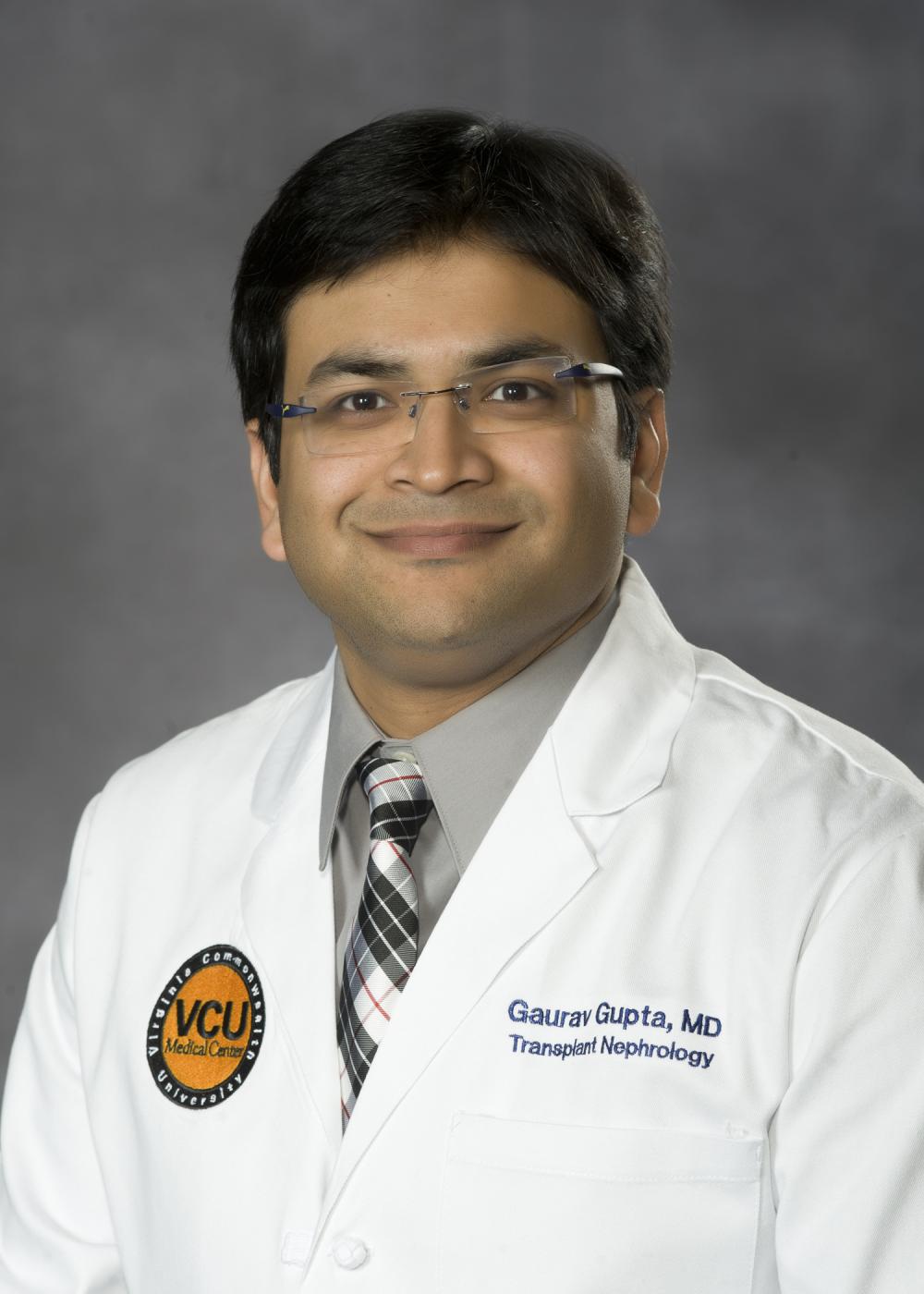
The gift was made in honor of Gaurav Gupta, M.D., a VCU Health transplant nephrologist, and its reach is limitless.
“Pathways are opened from gifts like this, changing the paradigm of care so that patient care is tailored to the individual,” Dr. Gupta said. “That is the holy grail of all medicine.”
Capturing the disease early starts with data, something VCU Health already has. Physicians and researchers just needed tools to decipher it. KiTE researchers developed a registry using existing health information of roughly 74,000 VCU Health patients at various stages of kidney disease. While it would be impossible for researchers to mine and then extrapolate the necessary data, this system is doing it for them.
Knowing the risk sooner means physicians can start treatment for comorbidities, such as hypertension or diabetes, or refer patients earlier for transplants.
“The system triggers physicians to see patients whose kidney functions have changed for the worse, and as a clinician, that’s very helpful because it’s telling me the likelihood a patient will be on dialysis in the next two to five years,” said Amber Paulus, Ph.D., RN, clinical research investigator for the Division of Nephrology at the School of Medicine.
In short, patients have more time to prepare, get healthy and potentially even avoid dialysis. The healthier the patient pre-transplant, the better the outcomes after transplant.
Dr. Gupta said that nearly half of transplant recipients die with a functioning transplant, meaning deaths occur from infections and other complications that arise despite post-transplant immunosuppression drugs.
“The yin and yang of transplantation is that too many medications for immunosuppression means you die of infections and other complications, but too little medication means the transplant could be rejected,” he said. “We’re using a variety of molecular diagnostic tests at the gene level to tailor patients’ medications so that we can keep the kidneys working for a much longer time with the least number of complications.”
If you are interested in supporting this research, please contact Nathan Bick, executive director of development in the VCU Office of Medical Philanthropy and Alumni Relations, at 804-828-4800 or ngbick@vcu.edu.