The Story of a Heart Center That Grew into Its Name
Written by Tim Shea | Video by Tyler Trumbo
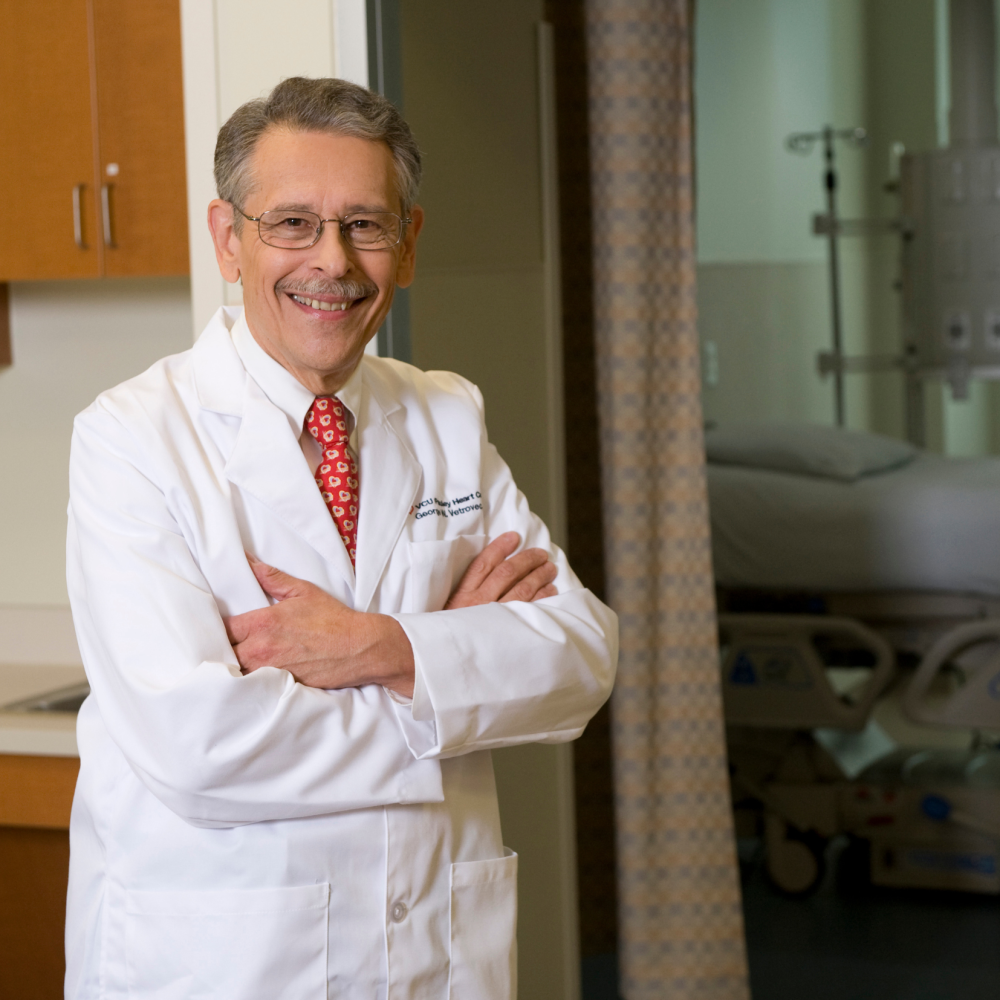
In the late 1980s, George Vetrovec, M.D., heard plenty about how a heart center ought to function.
His instincts, however, pointed him toward what one could mean. He was beginning the complex project of creating a specialized cardiovascular center at the VCU School of Medicine – an effort to unify research, patient care and education into a single, strategic vision.
Across the Pauley Heart Center and the VCU School of Medicine, donors, volunteers and champions have played a defining role in advancing care, research and education. Their generosity endows professorships and chairs for faculty leaders, accelerates scientific breakthroughs and supports the training of future clinicians and scientists. Philanthropy is woven through every achievement, reflecting a shared belief in what compassionate, innovative care can make possible.
At the time, prevailing wisdom emphasized efficiencies such as streamlining operations and building economies of scale. If you did that, the logic went, you could call it a heart center. By that measure, Vetrovec jokes, he could have assembled a team and lined the lobby with electrocardiogram wallpaper – the spikes and dips of a heartbeat announcing a theme rather than a purpose.
He saw the appeal of that strategy, yet he believed a center focused mainly on operational efficiency would miss the point. He wanted clinicians, researchers, trainees and patients on the MCV Campus to be in conversation. By designing a system that put those voices together, something far more meaningful could take shape.
“Once you have people talking,” he says, “you can do more than just be efficient. You can create new opportunities for teaching, research and advanced patient care.”
By the time VCU’s Heart Center was formally established in 1991, many of the pieces Vetrovec originally envisioned had been put into place: a growing faculty, a culture of teaching and discovery, and a patient community whose needs demanded a more integrated model of care. Philanthropy also played a defining role in this period, establishing endowed faculty positions that strengthened the center’s foundation and helped propel its clinical, research and educational missions in the years that followed.
As that foundation was taking shape, the center’s promise drew the attention of Stan and Dorothy Pauley, whose connection to the VCU School of Medicine was deeply personal. Stan had been under the care of Kenneth Ellenbogen, M.D., whose expertise and compassion became the foundation for a $5 million gift that would change the trajectory of the Heart Center, the institution and cardiovascular medicine in Virginia.
A Legacy Rooted in the Curiosity and Courage of Foundational Leaders
The Pauleys’ naming gift in 2006 affirmed a history of innovation. Their support matched the institution’s record of early adoption and technical daring. “Stan Pauley was a self‑made man,” Vetrovec says. “That kind of success requires a certain spirit, and he had it. I like to think he and Dorothy supported us because they saw that same energy here.”
Two physicians who embodied that energy were Vetrovec and Ellenbogen. Their careers ran on parallel tracks and shaped different dimensions of the Heart Center’s early identity while broadening VCU’s reputation on the national stage. Each acted as a developer in the evolution of his subspecialty: Vetrovec in interventional cardiology, Ellenbogen in electrophysiology.
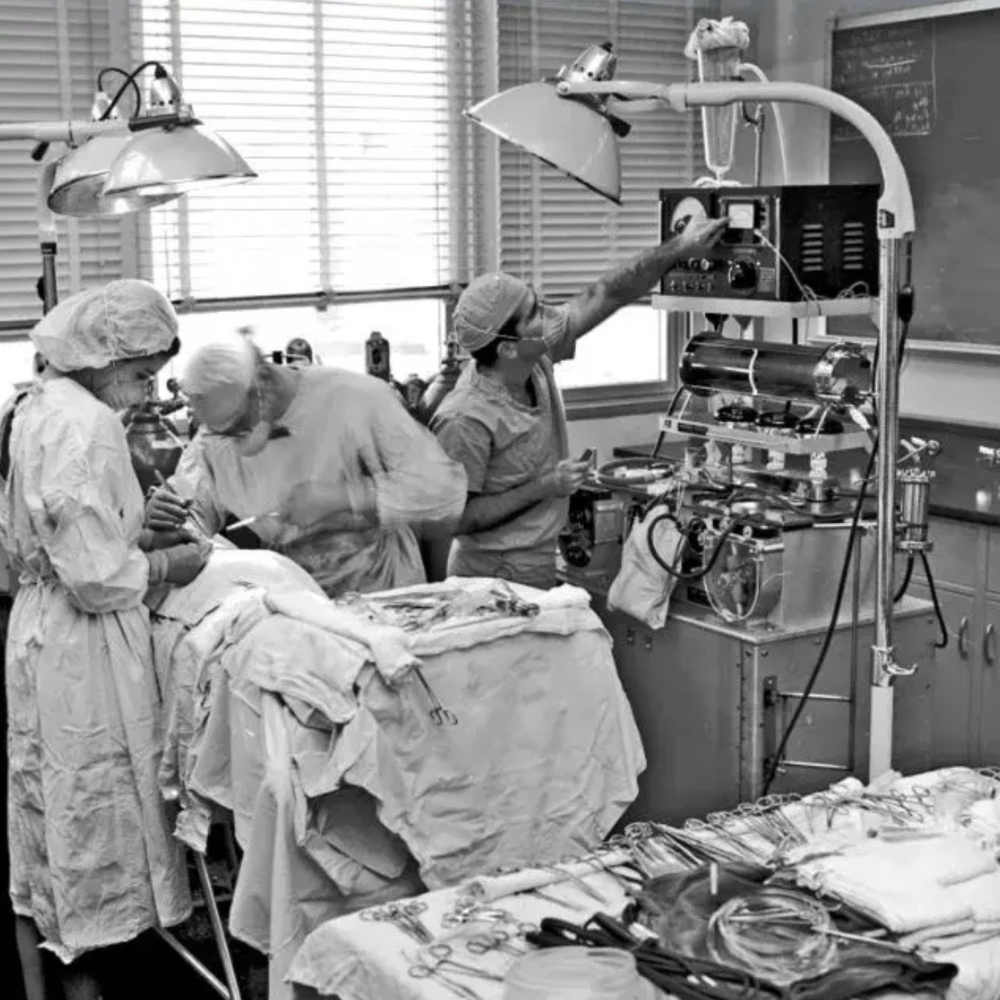
In the late 1970s and early 1980s, balloon angioplasty emerged as a revolutionary alternative to bypass surgery as a treatment for coronary artery disease, the most common form of heart disease. In 1979, Vetrovec and colleague Michael Cowley, M.D., performed the first balloon angioplasty in Virginia, making VCU one of the first 10 hospitals in the United States to offer the procedure. The new approach transformed cardiac care and reinforced the VCU School of Medicine’s reputation as a place where new ideas took root quickly.
Ellenbogen arrived early in the evolution of electrophysiology, at a time when the field was only beginning to reshape modern cardiology. Over the decades that followed, his research shaped device therapy, his textbooks became foundational references, his clinical trials advanced technologies that are now the standard of care, and his training programs produced leaders who carried VCU’s influence across the country. Thanks to Ellenbogen’s leadership, in 1998 VCU became one of the first three hospitals in the U.S. to perform catheter ablation for atrial fibrillation – now the standard treatment for the most common heart rhythm disorder.
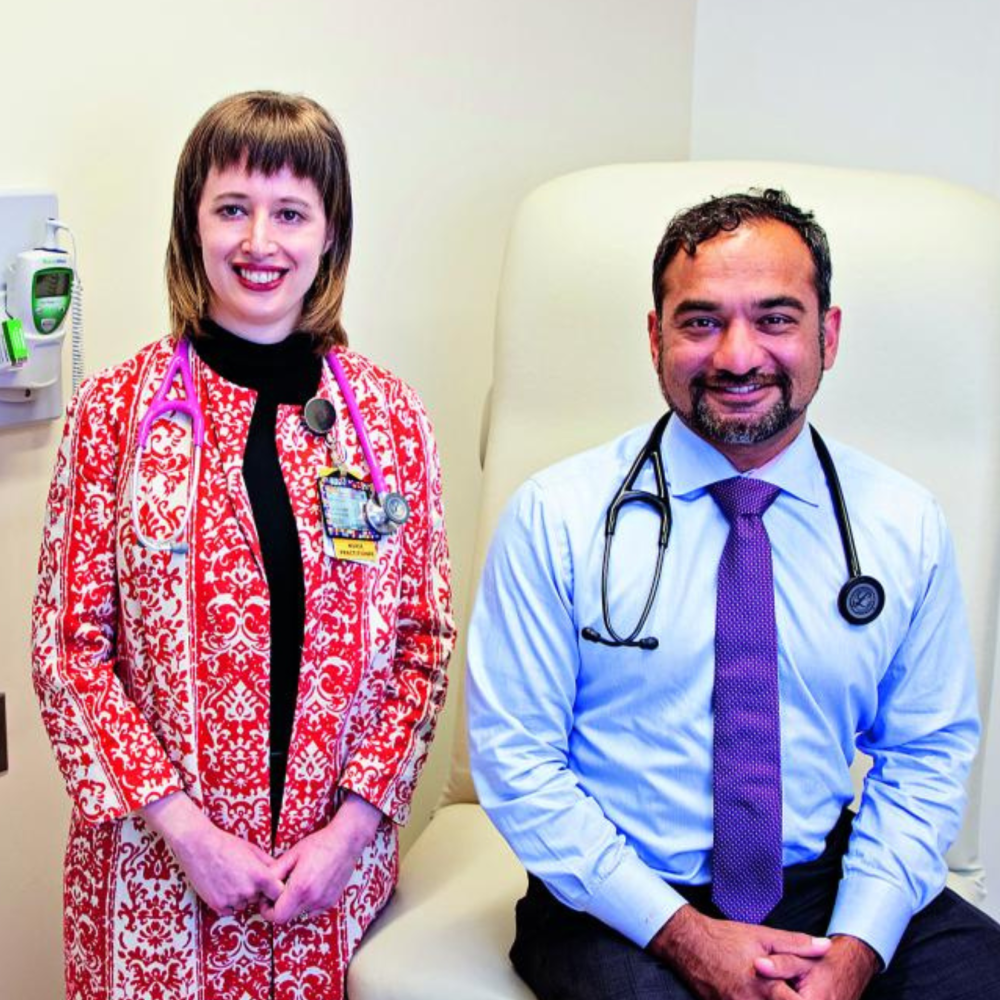
The adage “never meet your heroes” does not apply here. Working alongside figures such as Vetrovec and Ellenbogen is something Pauley faculty cherish. “Dr. George Vetrovec has left a permanent imprint on what Pauley stands for,” says Keyur Shah, M.D., interim chair of the Division of Cardiology. “His dedication is what we all try to live up to, and his ability to engage patients, community leaders and other providers is one I aspire to.”
For more than 15 years Hem Bhardwaj, M.D., vice chair of cardiology for clinical operations and quality, has seen Ellenbogen deliver innovation locally and globally. “When you look at anything in cardiovascular medicine, the way that we've grown is because we had genius minds like Dr. Ellenbogen asking what we can do to best take care of patients,” Bhardwaj says.
A New Generation Expands Pauley’s Reach and Impact
As the Pauley Heart Center matured, its interdisciplinary partnerships deepened, bringing together leaders whose work across medicine and surgery advanced a more unified approach to cardiovascular care. One of the most influential was Vigneshwar Kasirajan, M.D., a nationally recognized cardiothoracic surgeon. Kasirajan, chair of the Department of Surgery, led the first surgical team on the East Coast to implant a total artificial heart. His work in heart transplant, mechanical circulatory support and complex procedures for high‑risk patients helped shape the center’s national reputation. That momentum was reflected in 2009, when for the first time Pauley was ranked among the nation’s top 50 programs for heart and heart surgery by U.S. News & World Report.
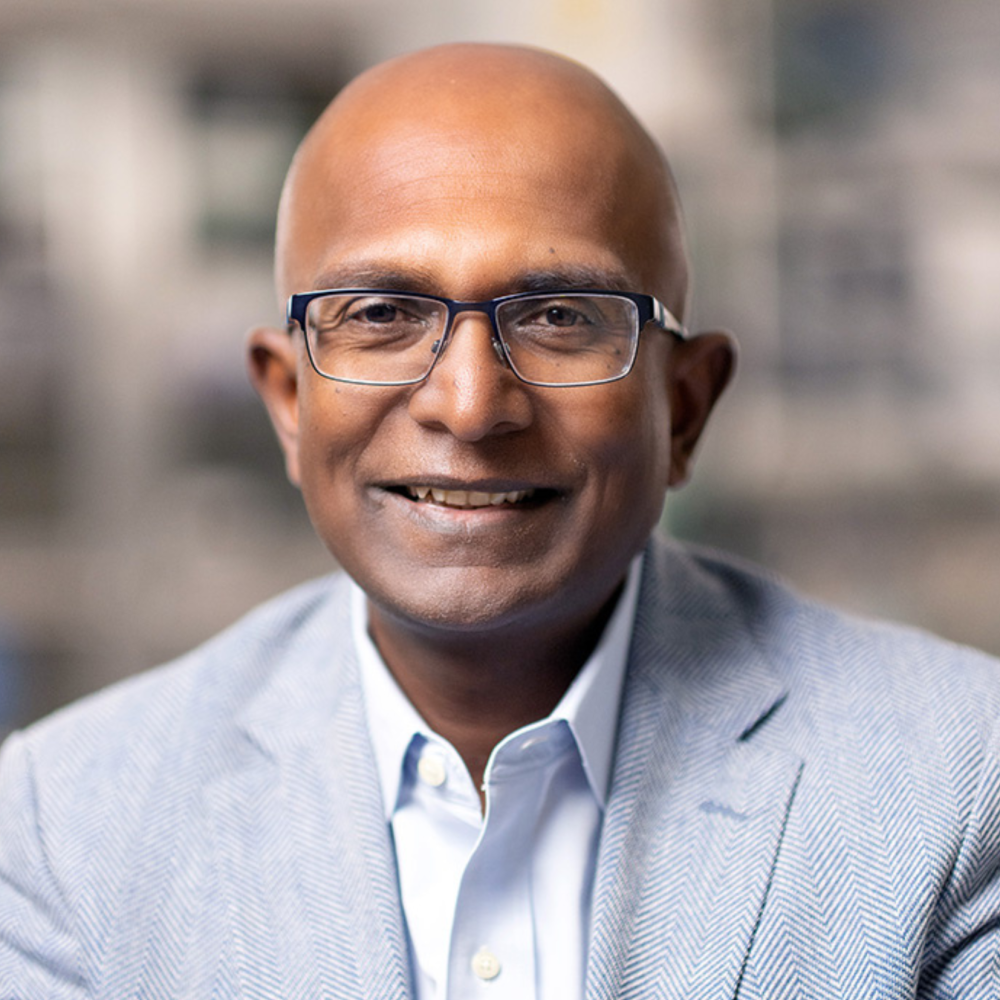
Kasirajan’s influence extended beyond the operating room. He built teams, fostered collaboration and helped create one of the nation’s most robust advanced heart failure programs.
“I came to VCU because of Dr. Kasirajan,” Shah says. “I was told that he pushed the edges of what other surgeons would do to help patients. What I didn’t know before I arrived was how effective he was as a leader and someone who can bring people together.”
If Kasirajan represented Pauley’s surgical engine, W. Gregory Hundley, M.D., represented its research and imaging renaissance. A VCU School of Medicine alumnus, Hundley was the first in the world to use MRI to visualize and measure blood flow in coronary arteries and the first to show that MRI stress testing can identify people at risk of heart attack. A leader in cardio‑oncology research, he helped define a field that now shapes care for cancer survivors worldwide. When Hundley returned to VCU in 2018 as the inaugural director of the Pauley Heart Center, he brought scientific distinction and a builder’s instinct.
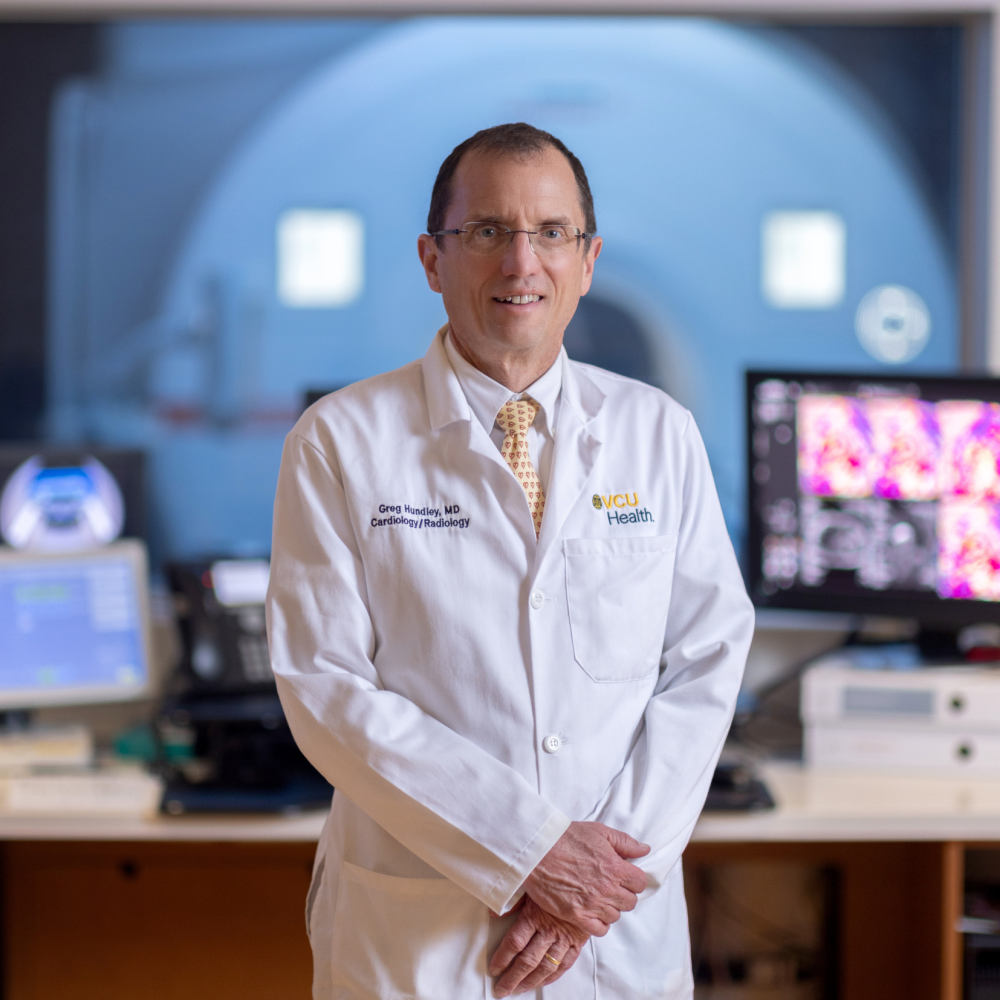
Hundley has expanded Pauley’s footprint across Virginia, strengthened community partnerships and helped secure state funding for workforce development to train technicians, perfusionists and other essential roles in cardiovascular medicine. His leadership helped position Pauley as a statewide resource rather than a Richmond institution.
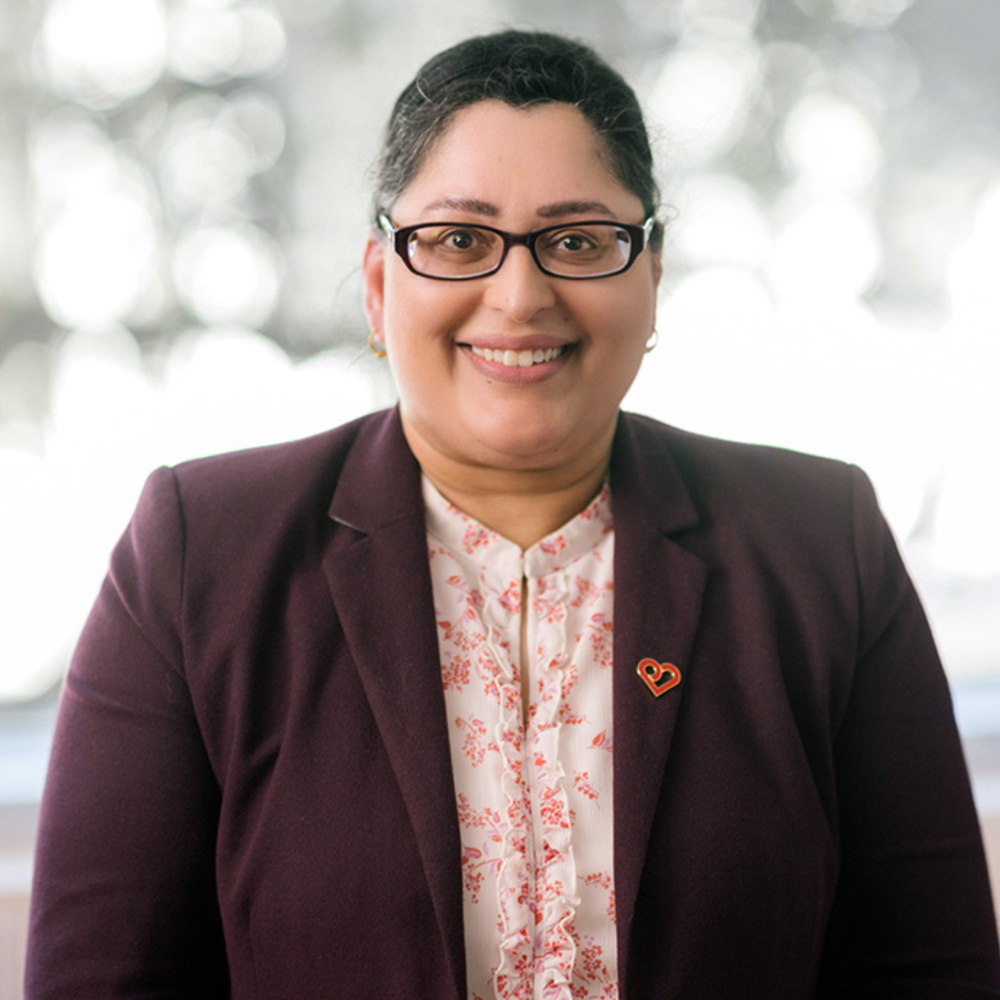
For Bhardwaj, the influence of these leaders is personal. She grew up in Richmond, completed her fellowship training at the VCU School of Medicine and now helps lead the Center she always admired. “Dr. Vetrovec and Dr. Ellenbogen trained me, and I work alongside Dr. Hundley,” she says. “They are transformational leaders, and their leadership is enhanced by the fact that they treat every member of the team equally.”
Years ago, during her training, she remembers Vetrovec joining her in the cardiac ICU late at night.
“Why are you here?” she asked.
“Well, you’re here,” he replied. “I’m going to be here.”
That ethos of hard work and dedication to patients is foundational to the culture that has shaped the center’s modern identity and its expanding role across Virginia.
A Future Built on Access, Integration and the Community’s Health
The next chapter of the Pauley Heart Center is defined by a bold idea: bring all aspects of cardiovascular care, research and education under one roof. The Pauley Heart Center Pavilion at VCU Health is not simply a building; it is a reimagining of how heart care can be delivered in a region with some of the highest cardiovascular risk in the country.
Hundley, who leads the pavilion project, was drawn to VCU in part because of Richmond’s urgent needs. “Even several blocks from our location, the average lifespan is only 63 to 68 years,” he says. “The primary causes of death are heart attack, stroke and the progression of heart failure.”
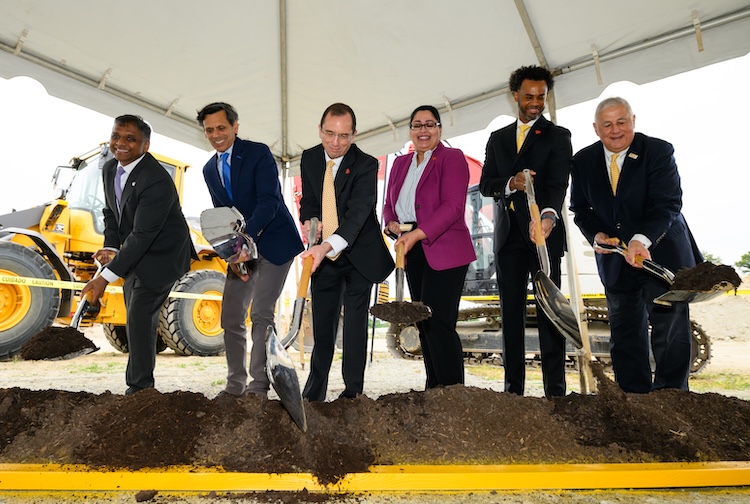
The pavilion is designed to meet that need head on. Today’s cardiovascular patients often require imaging, labs, procedures, education and specialist consultations – sometimes across multiple cardiovascular subspecialties. The new facility will allow them to receive those services in one visit, in one location. “What if you could put all of that under one roof?” Hundley asks. “That was the vision.”
The pavilion will also house Virginia’s largest cardiopulmonary rehabilitation facility, serving thousands of patients each year. By co‑locating research teams with clinical operations, the building will accelerate clinical trials and translational science. “All of those testing procedures can be achieved in the pavilion,” Hundley says.
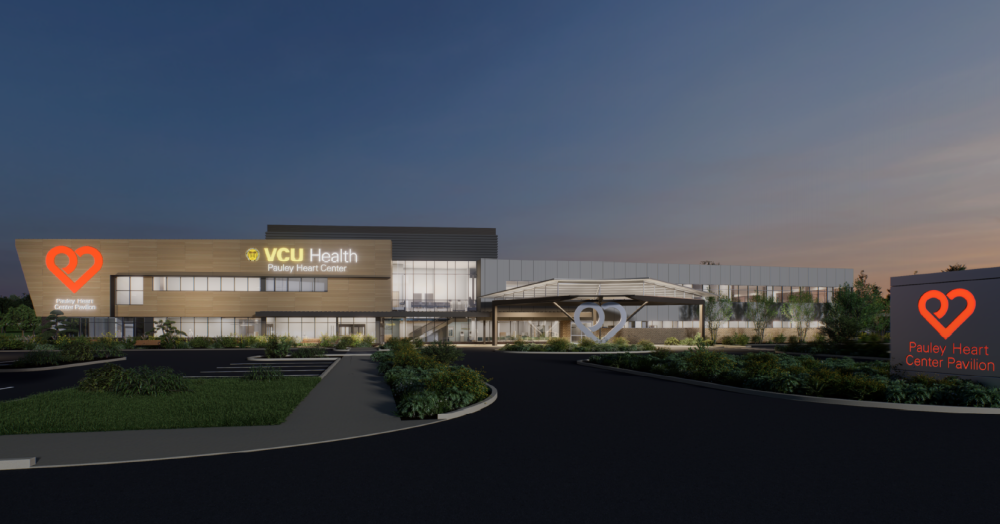
Bhardwaj sees the pavilion as a turning point for the region. “I’m so excited to be able to say that we are expanding our access,” she says. “The pavilion is going to be a place of possibilities.”
Shah views the pavilion as the next logical step in Pauley’s evolution. “The top priority is increasing patient access to our highly specialized Pauley Heart Center care,” he says. “Housing this talent under one roof will nurture collaboration so ideas can develop and innovation can occur.”
A Legacy That Lives Forward
As the Pauley Heart Center marks the 20th anniversary of its naming, George Vetrovec reflects on the journey with humility. Looking back, he folds milestones and the people behind them into a single story of shared effort: mentors, colleagues, trainees, patients and, of course, Stan and Dorothy Pauley.
“Every time we shared an exciting piece of news or a breakthrough with Mr. Pauley, his response was always, ‘What are you doing next?’” Vetrovec says. “That taught me not to rest on what we’ve accomplished. Ask where you go next.”
Twenty years after the Pauleys made their visionary gift, their belief in VCU’s potential has been made a reality. Its story continues to unfold as the Heart Center they named carries forward the tradition of setting national standards in cardiovascular care, research and education. With the new pavilion, the Pauley Heart Center’s next chapter promises to be its most transformative yet, extending a spirit shaped by innovation and a deep devotion to those it serves.
To support the VCU Health Pauley Heart Center, make a gift online, or contact Justin Jannuzzi, senior director of development, at jannuzzijp@vcu.edu.